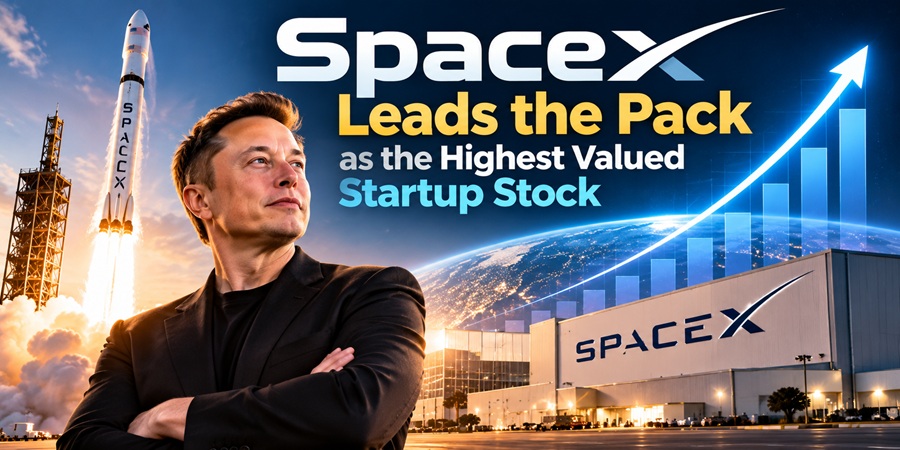
The highest valued startup stock right now is SpaceX, which trades on the Nasdaq under the ticker SPCX. It went public on June 12, 2026, priced its shares at $135 and closed its first day at $160.95, a gain of just over 19 percent. That first-day close gave it a market value of roughly $2.1 to $2.2 trillion, making it the largest company ever to go public.
Among companies that are still private, the most valuable is Anthropic, last valued at $965 billion in a May funding round. It filed its public IPO paperwork on October 26 and plans to list on Nasdaq under the ticker ANT, possibly as soon as mid-November. OpenAI, valued at $852 billion in its last private round, is also preparing to go public.
Highest Startup Stock: Key Facts
| Item | Details |
| Highest valued startup stock | SpaceX (Space Exploration Technologies Corp.) |
| Ticker and exchange | SPCX on Nasdaq |
| First trading day | June 12, 2026 |
| IPO price | $135 per share |
| First-day close | $160.95 (about 19 percent above IPO price) |
| First-day market value | Roughly $2.1 to $2.2 trillion |
| Amount raised | About $75 billion, the largest IPO on record |
| Most valuable private startup | Anthropic, last valued at $965 billion |
| Next big listing to watch | Anthropic (ticker ANT), pending pricing |
Note: stock prices change daily. Always check a live quote before making any decision.
What “Highest Startup Stock” Can Mean
People type this question with a few different meanings in mind, and the answer depends on which one you are after.
| What You Mean | What to Look At | Current Answer |
| Biggest company that recently went public as a startup | Market capitalization | SpaceX |
| Most valuable startup that has not listed yet | Latest private valuation | Anthropic |
| Startup stock with the highest price per share | Share price | Varies, and mostly meaningless on its own |
| Best performing recent startup IPO | Return since listing | Changes week to week |
That third row deserves attention. A company with a $500 share price is not automatically worth more than one at $50. Share price depends on how many shares exist. Market capitalization, which is share price multiplied by total shares, is the number that actually tells you how big a company is.
How SpaceX Became the Biggest Startup Stock Ever
SpaceX spent more than two decades as a private company, raising money from investors while building rockets, launching satellites and growing its Starlink internet service into a major business.
Earlier in the year, it merged with Elon Musk’s AI company xAI. That combined business was valued at about $1.25 trillion in private markets, and the deal expanded SpaceX’s story from rockets and satellites into AI infrastructure.
The IPO itself broke records on several fronts. It raised about $75 billion, far beyond the previous record held by Saudi Aramco. Shares opened at $150, hit an intraday high above $176 and settled at $160.95 by the close.
Retail investors piled in. SpaceX was by far the most bought stock among individual investors that day, and the rush of orders caused thousands of reported service disruptions on at least one popular trading app.
The Ripple Effect on Other Space Stocks
Not everyone in the sector celebrated. Rocket Lab, a competing launch company, fell more than 10 percent on SpaceX’s debut day, and a popular space industry ETF dropped as well. Investors appeared to sell smaller space names to buy into the new heavyweight.
The Startups Lining Up Behind SpaceX
SpaceX was the opening act. Two AI companies are next in line, and either could end up rivaling it in size.
| Company | Status | Latest Valuation | Expected Ticker |
| SpaceX | Public since June 12 | About $2.1 to $2.2 trillion at first close | SPCX |
| Anthropic | Public S-1 filed October 26, not yet priced | $965 billion (May private round) | ANT |
| OpenAI | Preparing for listing, confidential filing reported | $852 billion (March private round) | Not announced |
| Stripe | Private | About $159 billion | Not announced |
| Databricks | Private | About $134 billion | Not announced |
Anthropic
Anthropic, the company behind the Claude AI models, has made its S-1 filing public, which starts the formal countdown to listing. Under SEC rules the earliest it could begin trading is mid-November, though dates often slip.
The filing showed $16.3 billion in revenue for the first half of the year, alongside heavy spending on computing power. Price range, share count and final valuation were left blank. Some investors expect an IPO valuation approaching $2 trillion, but nothing is confirmed until the offering is priced.
One unusual detail drew attention: Anthropic plans to let some insiders sell shares from the first trading day, with lockups expiring in stages afterward. That could add selling pressure early on.
OpenAI
OpenAI raised a huge private round at an $852 billion valuation and has reportedly filed confidential IPO paperwork. It has a much larger consumer user base than Anthropic, but a timeline for listing has not been confirmed.
What Investors Should Know Before Buying a Hot Startup Stock
Excitement around giant startup IPOs is easy to understand. The track record of buying them on day one is far more mixed than the headlines suggest.
First-day pops often fade. Design software maker Figma posted one of the biggest day-one gains for a large US IPO, rising about 250 percent. It later traded around 45 percent below its IPO price. A strong debut tells you about demand on one day, not long-term value.
Losses are common at this stage. SpaceX reported a net loss of about $4.28 billion in the first quarter, even as its valuation soared. Large AI companies are also spending heavily, with profitability still years away by many estimates.
Not every analyst is a fan. Shortly after SpaceX’s debut, CFRA Research issued a sell rating with a 12-month price target of $115, below the IPO price. Strong opinions exist on both sides.
Lockup expirations matter. When early investors and employees are allowed to sell, extra shares can hit the market and pressure the price. Check when lockups end before buying.
Concentration risk is real. A single giant stock can dominate a small portfolio. Many investors prefer to get exposure through broad index funds, which will typically add large new listings over time.
| Risk | What It Looks Like | How Investors Often Respond |
| Valuation risk | Price reflects years of expected growth already | Wait for the hype to cool, buy in stages |
| Volatility | Large daily price swings | Use small position sizes |
| Lockup selling | Price pressure as insiders sell | Track lockup dates |
| Profitability gap | Heavy losses despite high valuation | Read the financial filings, not just headlines |
| Access limits | Small investors rarely get IPO price allocations | Accept paying market price or wait |
Can Ordinary Investors Buy These Stocks?
SpaceX is now open to anyone with a brokerage account that offers US stocks. Investors outside the US, including in India, can typically buy it through international brokerage platforms or apps that support US equities, subject to local rules and fees.
Private companies like Anthropic and OpenAI cannot be bought through a regular brokerage account until they list. Before an IPO, access is mostly limited to large investors through secondary markets or special purpose vehicles, often with high minimums and fees. Once trading begins, shares can be bought at market price like any other listed stock.
Getting shares at the actual IPO price is a different matter. Allocations usually go to institutional investors, with a smaller slice set aside for retail brokers. Most individuals end up buying after trading starts, which is exactly when prices can be most volatile.
How to Track the Ranking Yourself
Because this ranking moves quickly, it helps to know where to check rather than relying on any single article.
For listed companies like SpaceX, look at market capitalization on any major finance site or your brokerage app. Compare it against other large companies to see where it sits on a given day.
For private companies, valuations only change when a new funding round, tender offer or IPO pricing is announced. Startup trackers and financial news outlets report these as they happen, but the figures are snapshots, not live prices.
For upcoming listings, watch for three milestones: the public S-1 filing, the announced price range and the final pricing the night before trading. Each one narrows the gap between talk and reality.
A simple habit works well here. When you see a headline calling something the biggest or most valuable startup, check whether the number is a live market value, a private round or a projected IPO valuation. They are often mixed together, and they mean very different things.
Where This Leaves the Question
Right now, SpaceX holds the title of highest startup stock by a wide margin, and its record IPO has set the benchmark for everything that follows. Anthropic is the most valuable startup still in private hands, and its listing will likely be the next big test of public market appetite for AI.
The ranking could look different within weeks. If Anthropic or OpenAI prices near the valuations being discussed, the conversation about the biggest startup stock will turn into a two or three way race. Keep an eye on the pricing news, check live market data and treat any record-breaking debut with equal parts interest and caution.
This article is for general information only and is not financial advice. Consider speaking with a licensed financial advisor before making investment decisions.