Category: Finance & Investment

Understand business finance, budgeting, cash flow, investment strategies, funding, and financial planning.

  • When a Savings Bond Is the Best Investment to Earn Interest

    When a Savings Bond Is the Best Investment to Earn Interest

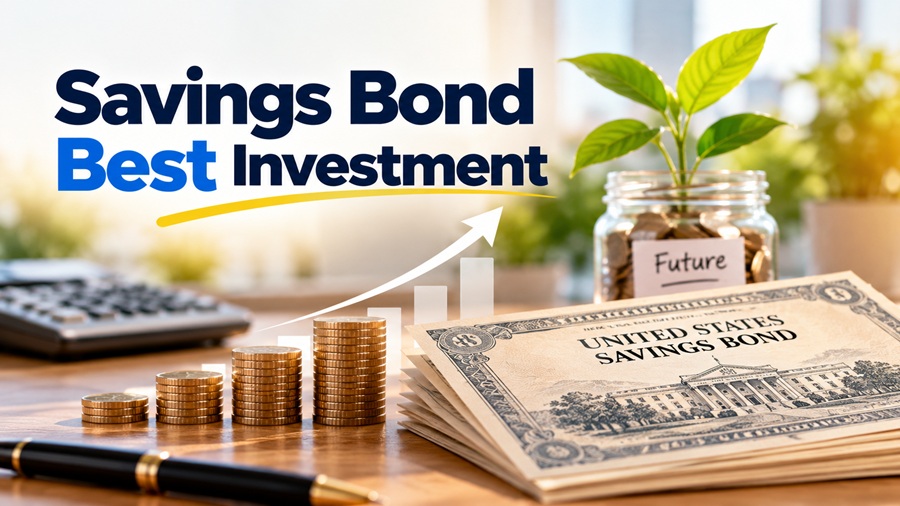
    A savings bond is the best investment to earn interest when your top priority is safety and you can leave the money untouched for several years. The classic example is a parent or grandparent setting aside money for a child’s education ten or more years away. They want a guaranteed return backed by the US government, no risk of losing the original amount and no need to access the cash any time soon.

    Savings bonds are a poor fit when you need money quickly or want high growth. You cannot cash them at all in the first 12 months, you give up three months of interest if you cash them before five years and their returns are typically lower than what stocks have delivered over long periods. They shine in a narrow set of situations, and knowing those situations is the key to using them well.

    Savings Bonds at a Glance

    Item Summary
    What they are Low-risk bonds issued by the US Treasury to individual savers
    Main types Series EE and Series I
    Backing Full faith and credit of the US government
    Minimum holding period 12 months
    Early redemption penalty Lose last 3 months of interest if cashed before 5 years
    Maximum interest period 30 years
    Annual purchase limit $10,000 per person per bond type, electronically
    Tax treatment Federal tax applies, exempt from state and local income tax
    Best for Safe, long-term saving with no market risk

    The Situations Where Savings Bonds Make the Most Sense

    Not every saver should buy savings bonds. But in certain cases, they are hard to beat.

    Situation Why a Savings Bond Fits
    Saving for a goal 5 to 20+ years away Interest builds steadily and penalties disappear after 5 years
    You want zero risk of losing principal Backed by the US government, value never falls
    You are worried about inflation Series I bond rates adjust with inflation
    Saving for education Interest may be federally tax free for qualified expenses
    You live in a high-tax state Interest is exempt from state and local income tax
    Giving a long-term gift to a child Bonds can be bought as gifts and grow steadily
    You want to avoid market swings No daily price changes to watch or worry about

    Saving for a Long-Term Goal

    This is the most common correct answer to the question. Savings bonds reward patience. Series EE bonds are guaranteed by the Treasury to double in value if held for 20 years, which works out to a modest but certain return. Holding them that long turns a low-key investment into a meaningful one.

    Protecting Money From Inflation

    Series I bonds combine a fixed rate with an inflation rate that resets every six months. When inflation rises, so does the interest on the bond. During periods of high inflation, I bonds have offered some of the most attractive safe returns available to everyday savers.

    Paying for Education

    Under certain conditions, interest on EE and I bonds can be excluded from federal income tax when used for qualified higher education expenses. There are income limits and rules about who owns the bond, so it pays to check the details. When the rules fit, this makes savings bonds especially appealing for education saving.

    Series EE vs. Series I Bonds

    The two current types of savings bonds work differently, and choosing the right one depends on what you are trying to achieve.

    Feature Series EE Bonds Series I Bonds
    Interest type Fixed rate for the life of the bond Fixed rate plus inflation rate
    Rate changes No Inflation part resets every 6 months
    Special guarantee Doubles in value if held 20 years Value cannot fall, even with deflation
    Best for Very long-term saving, 20 years or more Protecting purchasing power against inflation
    Purchase limit $10,000 per year electronically $10,000 per year electronically
    Minimum purchase $25 $25

    If you are confident you will hold for 20 years, EE bonds offer a known outcome. If you are more concerned about inflation over a shorter or uncertain period, I bonds often make more sense.

    Rates for both are announced by the Treasury, with updates generally published each May and November, so check the current rates before buying.

    When a Savings Bond Is Not the Best Choice

    Knowing when to avoid savings bonds matters just as much.

    You Need Access Within a Year

    Savings bonds cannot be cashed during the first 12 months. If there is any chance you will need the money soon, a high-yield savings account or money market fund is a better home.

    You Might Need the Money Within Five Years

    Cashing in before five years costs you the last three months of interest. It is not a huge penalty, but it does reduce an already modest return.

    You Want Higher Long-Term Growth

    Over long periods, diversified stock investments have historically delivered higher average returns than savings bonds, though with far more ups and downs. For retirement saving decades away, many investors lean toward stocks for growth and use bonds for stability.

    You Want to Invest Large Amounts

    The $10,000 annual limit per bond type means savings bonds cannot absorb large sums. Someone with $100,000 to invest safely would need other tools, such as Treasury bills, notes or CDs.

    Better Safe Yields Are Available Elsewhere

    Sometimes high-yield savings accounts, CDs or Treasury bills pay more than savings bonds while offering similar safety. It is worth comparing current rates before deciding.

    Option Safety Liquidity Typical Use
    Savings bonds Very high Low in early years Long-term safe saving
    High-yield savings account Very high (insured up to limits) Very high Emergency funds, short-term goals
    Certificates of deposit Very high (insured up to limits) Low until maturity Fixed-term saving
    Treasury bills Very high High, can sell before maturity Short-term safe returns
    Stock index funds Moderate to high risk High Long-term growth

    A Few Real-World Examples

    Seeing how different people might use savings bonds makes the answer clearer.

    A grandparent and a newborn. A grandmother wants to give her granddaughter a gift that will help with college. She buys savings bonds each birthday. The money is safe, grows steadily and will be available when the child turns 18. This is a textbook good fit.

    A cautious saver worried about inflation. A retiree has enough in stocks and wants a portion of savings protected from rising prices without market risk. Series I bonds offer exactly that.

    A young worker building an emergency fund. He considers savings bonds for his first $3,000 of savings. Because he might need the money any time, a high-yield savings account is a better option. Savings bonds would lock him out for a year.

    A business owner with surplus cash. She has $150,000 to park for 18 months. The $10,000 annual limit and the early cashing penalty make savings bonds impractical. Treasury bills or CDs fit better.

    How to Buy Savings Bonds

    Electronic savings bonds are bought directly from the US Treasury through its TreasuryDirect platform. You create an account, link a bank account and choose the type and amount, starting at $25.

    Bonds can be bought for yourself, for a trust or as gifts for other people, including children. Gift bonds are delivered to the recipient’s account, which they need to set up to receive them.

    Keep good records of purchases. Since interest builds silently for years, it is easy to forget about bonds tucked away in an account.

    Tax Points to Know

    Savings bond interest is subject to federal income tax but exempt from state and local income tax. That can be a real advantage in states with high income taxes.

    You can usually choose to report interest each year or defer it until you cash the bond or it stops earning interest after 30 years. Most people defer.

    The education exclusion mentioned earlier can make interest federally tax free when used for qualified expenses, provided income limits and ownership rules are met.

    The Clear Answer

    So, in which situation would a savings bond be the best investment to earn interest? When you want a completely safe, government-backed return, do not need the money for at least five years and ideally much longer, and value certainty over high growth. Saving for a child’s education, protecting money from inflation and building a long-term safe reserve are the situations where savings bonds make the strongest case.

    They are not exciting, and they are not meant to be. Their strength is reliability. For the right goal, that steady, low-stress growth is exactly what makes them worth owning.

    This article is for general information only and is not financial advice. Consider speaking with a licensed financial advisor before making investment decisions.
  • How Professional Valuation Helps Owners Make Better Business Decisions

    How Professional Valuation Helps Owners Make Better Business Decisions

    A business valuation is a structured estimate of what an ownership interest or operating business is worth for a defined purpose and as of a specific date. It is not simply a multiple applied to annual revenue, nor is it necessarily the price a buyer will agree to pay. The conclusion depends on the business’s financial performance, risk, assets, growth prospects, market conditions, and the assumptions used. A credible valuation explains its methods and limitations so decision-makers can understand what the result does and does not establish.

    Owners may seek valuation support before selling a company, bringing in an investor, planning succession, resolving a shareholder dispute, or assessing a transaction. Lenders, legal advisers, accountants, and tax professionals may also need valuation information in specific circumstances. The required standard of work varies: an informal planning estimate is not interchangeable with a formal report prepared for litigation, financial reporting, or a regulated purpose.

    Common reasons to obtain a valuation

    Situation  |  What the valuation helps clarify  |  Important consideration

    Sale or acquisition  |  A reasoned range for negotiation  |  Buyer-specific synergies can change price

    New investment  |  The implied value of equity and ownership dilution  |  Terms and rights matter alongside headline value

    Succession planning  |  Potential transfer value and planning options  |  Legal and tax advice may be required

    Shareholder changes  |  Value of an ownership interest  |  Agreement terms and minority rights can matter

    Financial reporting  |  Measurement under the applicable reporting framework  |  Standards and assumptions must be appropriate

    Dispute or litigation  |  Evidence relevant to a contested value  |  Independence and documentation are critical

    Define the assignment before discussing a number

    The first question should be why the valuation is needed. A value prepared for a potential sale may differ from one required for tax reporting or a shareholder agreement because the applicable premise, assumptions, standard, and date may differ. The valuator should identify the subject interest, the relevant valuation date, the intended use, the intended users, and the level of reporting. Without this context, a precise-looking number can be misleading.

    Ask what credentials and experience the provider has with businesses of similar size and industry. Understand whether the engagement is an independent valuation, a calculation engagement, a broker opinion, or a preliminary estimate. These are not always equivalent services. Clarify deliverables, data requirements, confidentiality, timing, fees, and whether the professional may be asked to explain the work to other parties.

    The income approach

    The income approach estimates value based on the economic benefits the business is expected to generate. One common method is discounted cash flow, which forecasts future cash flows and discounts them to present value using a rate reflecting time and risk. It can be useful when future performance can be forecast with reasonable support, but results are sensitive to assumptions about revenue growth, margins, reinvestment, working capital, and the discount rate.

    Forecasts should connect to operating reality. A service company expecting growth should explain its sales pipeline, capacity, hiring plan, customer retention, and pricing. A manufacturer may need to account for equipment investment, input costs, production constraints, and inventory. A projection that assumes rapid growth without the staff, systems, or capital required to support it is not persuasive simply because the spreadsheet calculates correctly.

    The income approach may also use capitalized earnings or cash flow when a stable level of future performance is a reasonable assumption. The method chosen depends on the business’s stage, volatility, and the purpose of the engagement.

    The market approach

    The market approach compares the business with relevant transactions or publicly traded companies. Valuation multiples may be based on earnings, cash flow, revenue, or other industry-specific measures. The challenge is comparability. A large public company with diversified customers, easier access to capital, and a mature management team may not be a suitable direct comparison for a small owner-operated business.

    The analyst may need to adjust for differences in size, growth, margins, customer concentration, geography, liquidity, and risk. Transaction data can also be incomplete: the headline price may include real estate, debt assumptions, earn-outs, or other deal terms. A multiple should therefore be interpreted in context rather than treated as a universal rule.

    The asset approach

    The asset approach considers the value of assets and liabilities, sometimes adjusting recorded balances to reflect current economic value. It can be relevant for asset-holding companies, businesses whose value is closely linked to identifiable assets, or situations where earnings do not adequately represent value. Depending on the assignment, the analysis may need to consider equipment, property, inventory, receivables, intellectual property, debt, and contingent obligations.

    Book value is not automatically market value. Equipment may be worth less than its accounting balance, while a property may have appreciated. Some internally developed assets may not be recorded on the balance sheet at all. The appropriate treatment depends on the valuation purpose and applicable standards.

    What affects a company’s value?

    Quality of earnings. Buyers and investors look for sustainable earnings rather than a single unusually strong period. One-time expenses, owner compensation, nonrecurring revenue, and unusual costs may require analysis. Adjustments should be supported by evidence and should not be used to present an unrealistic picture of profitability.

    Customer concentration and retention. Dependence on one major customer can create risk if the relationship ends. Repeat contracts, diversified revenue, and documented renewal patterns may support confidence, though they do not eliminate uncertainty.

    Management depth and operating systems. A company that depends entirely on the founder for sales, delivery, supplier relationships, and approvals may be harder to transfer. Documented procedures and a capable team can reduce transition risk.

    Growth quality. Growth that comes with deteriorating margins, heavy working-capital needs, or expensive customer acquisition may add less value than revenue growth alone suggests. A valuation should examine how much cash growth requires.

    Legal, operational, and financial risks. Pending disputes, tax issues, unclear intellectual-property ownership, customer data problems, outdated equipment, or weak financial controls can affect assumptions and negotiation. Addressing these issues early may be more valuable than commissioning a report and leaving the underlying risks unresolved.

    How to prepare for a valuation engagement

    Gather financial statements, tax filings, monthly management accounts, budgets, forecasts, debt schedules, customer and supplier information, major contracts, employee details, asset registers, and relevant legal documents. The provider will usually need to understand revenue by product or service, pricing, gross margins, payroll, owner compensation, capital expenditure, working capital, and unusual events. Consistent records reduce the time spent reconciling figures and make conclusions easier to defend.

    Prepare an explanation of recent changes. If revenue rose sharply, describe the cause and whether it is repeatable. If margins declined, explain changes in pricing, labor, supplier costs, or product mix. Identify customer losses, pending contracts, major capital needs, and dependencies on key individuals. Do not conceal negative information; unexpected discoveries late in a transaction can damage trust and delay negotiations.

    Choosing a valuation provider

    Ask for examples of relevant experience, the proposed methodology, the assumptions likely to matter, and how uncertainty will be communicated. Request a clear engagement letter describing scope, intended use, fees, confidentiality, and limitations. Check professional qualifications and whether the provider is independent of parties who may benefit from a particular conclusion. In complex transactions, coordinate with legal, tax, accounting, and investment advisers so that each specialist addresses the right question.

    For general background on valuation and financial reporting concepts, the International Valuation Standards Council (https://ivsc.org/) publishes standards and resources used by valuation professionals internationally. The applicable requirements can differ by jurisdiction and purpose, so the provider should identify the framework relevant to your engagement.

    Understand the result as a reasoned conclusion

    A report may present a single point estimate, a range, or scenario analysis depending on the assignment. Ask which assumptions have the greatest effect on the conclusion and what new information would change it. Sensitivity analysis can show how value responds to different growth, margin, or discount-rate assumptions. This is especially useful when future performance is uncertain.

    A valuation does not guarantee a sale price. Negotiation, financing availability, buyer-specific benefits, market conditions, deal structure, and due diligence all influence an actual transaction. Use the analysis as a decision tool, not as a substitute for commercial judgment.

    Conclusion

    Business valuation services can help owners make informed decisions about sales, investment, succession, disputes, and reporting. The value of the work depends on a clearly defined purpose, appropriate methods, reliable information, and transparent assumptions. Prepare records carefully, choose a qualified provider, and ask what drives the conclusion. A well-supported valuation is most useful when it improves the quality of the decision that follows.

  • Wind Power Startup Investments and Where the Real Opportunity Sits

    Wind Power Startup Investments and Where the Real Opportunity Sits

    Wind power is one of the most mature renewable energy sources in the world, which creates an odd situation for investors. The big turbine makers are giant, established companies. So where does a startup fit, and how does an ordinary investor get a piece of it?

    The short answer: wind power startup investments mostly sit in the layers around the turbine, not the turbine itself. Floating offshore platforms, airborne wind systems, blade recycling, predictive maintenance software and grid integration tools are where most venture money flows. Individual investors usually get exposure through equity crowdfunding platforms, publicly listed renewable energy companies or clean energy funds, since direct venture deals are typically limited to accredited or institutional investors.

    Wind Power Startup Investing at a Glance

    Item Summary
    Where startups focus Floating offshore wind, airborne wind, software, maintenance, materials, grid tech
    Who funds them Climate venture funds, corporate venture arms, governments, crowdfunding investors
    Access for individuals Equity crowdfunding, public stocks, renewable energy ETFs and funds
    Typical holding period Long, often five to ten years for private stakes
    Main risks Technology risk, policy shifts, financing costs, slow commercialization
    Main upside Exposure to long-term growth in clean electricity demand
    Liquidity Very low for private startups, high for public stocks and funds

    Why Wind Startups Look Different From Other Tech Startups

    A software startup can launch a product in months with a laptop and a cloud account. A wind startup might need years of engineering, prototype testing at sea or in the field and certification before it earns real revenue.

    That changes the investment math. Capital needs are higher, timelines are longer and the path to profit runs through utilities, developers and governments rather than individual app downloads.

    It also explains why so much venture money avoids turbine manufacturing altogether. Companies like Vestas, Siemens Gamesa and GE Vernova dominate that space with enormous scale. A startup trying to out-build them head on faces steep odds. Startups that make those turbines cheaper to install, easier to maintain or usable in new locations have a much clearer lane.

    The Main Segments Attracting Startup Money

    Not every wind startup is chasing the same opportunity. The segments carry very different risk profiles.

    Segment What They Build Stage of Maturity Risk Level
    Floating offshore wind Platforms, moorings and anchors for deep water turbines Early commercial High
    Airborne wind energy Kites or tethered drones that capture high altitude wind Pilot and demonstration Very high
    Digital operations and maintenance Sensors, analytics and predictive maintenance software Commercial Moderate
    Blade materials and recycling Recyclable blades and reuse of old blade material Early commercial Moderate to high
    Grid integration and storage Forecasting, balancing and pairing wind with storage Commercial Moderate
    Small and urban wind Compact turbines for buildings and farms Mixed High

    Floating Offshore Wind

    This is arguably the most watched segment. Fixed bottom turbines only work in fairly shallow water, but many of the best wind resources sit over deep ocean. Floating platforms open those areas up.

    Startups such as Gazelle Wind Power and Aikido Technologies have raised money to develop lighter, cheaper floating foundations. Gazelle is also an example of retail access done differently, having raised funds through equity crowdfunding from well over a thousand individual investors.

    Airborne Wind Energy

    Airborne wind sounds like science fiction. Tethered kites or wings fly in figure-eight patterns hundreds of meters up, where wind is stronger and steadier, and send power back to the ground.

    Companies like Kitepower and Altaeros Energies have attracted funding, including backing from large corporate investors. It is exciting technology with real potential, but it remains mostly at demonstration stage. Investors here are buying a long shot.

    Software and Maintenance

    This is the least flashy segment and, for many investors, the most sensible. Wind farms lose serious money when turbines break down unexpectedly. Startups that use sensors, drones and machine learning to predict failures can show clear savings to customers quickly.

    Revenue tends to come sooner, capital needs are lighter and the business model often looks like a familiar software subscription. Several climate investors have pointed to this layer as the strongest venture opportunity in wind.

    Who Is Putting Money Into Wind Startups

    Understanding who invests alongside you helps you judge a startup’s staying power.

    Climate focused venture funds, including names like Breakthrough Energy Ventures and Energy Impact Partners, back companies across clean energy, wind included.

    Corporate venture arms invest when a technology fits their own strategy. Energy companies, utilities and even automakers have backed wind startups. General Motors’ venture arm, for example, led a round in Norwegian floating wind developer Wind Catching Systems.

    Governments and public development banks provide grants, loans and co-investment, particularly for offshore projects that need patient capital.

    And individual investors increasingly come in through crowdfunding platforms, usually in early stage rounds where minimum investments are small.

    How Individual Investors Can Get Exposure

    Most people reading this will not be invited into a venture capital round. That does not mean the sector is closed off. It just means choosing the right route.

    Route Minimum Investment Liquidity Risk Best For
    Equity crowdfunding Often low Very low Very high Investors who want direct startup stakes and can wait years
    Angel investing or syndicates Moderate to high Very low Very high Accredited investors with sector knowledge
    Public wind and renewable stocks Price of one share High Moderate to high Investors wanting liquid exposure
    Clean energy ETFs and funds Low High Moderate Diversified, hands-off exposure
    Renewable energy yield companies Price of one share High Moderate Income focused investors

    Crowdfunding gives the most direct startup exposure, but it comes with the highest odds of losing everything and very few ways to sell early. Many experienced investors treat crowdfunded startup stakes as money they can afford to lose entirely.

    Public markets and funds will not give you pure startup exposure. They do give you liquidity, diversification and regular financial disclosures, which matter a lot in a sector this volatile.

    The Risks That Catch Investors Off Guard

    Wind looks like a guaranteed growth story on paper. Electricity demand keeps rising, data centers need power and governments want cleaner grids. Yet wind investments have disappointed plenty of people. A few risks explain why.

    Policy whiplash. Offshore wind in particular depends on permits, leases and subsidies. Political changes in the United States have stalled or cancelled several offshore projects, and companies exposed to those projects saw their prospects change quickly. Startups that depend on a single country’s policy are especially vulnerable.

    Interest rates. Wind projects cost a lot upfront and pay back over decades. When borrowing costs rise, the economics of new projects weaken, and the startups selling into those projects feel the slowdown.

    Supply chain and cost overruns. Large offshore developers have written down projects after costs for steel, vessels and installation climbed. When customers are under pressure, they buy less from startups.

    Technology that works but does not scale. A prototype that performs well in testing can still struggle to reach a cost per unit of electricity that competes with established options.

    Long timelines. Even promising wind startups can take many years to reach meaningful revenue. Investors who need their money back in two or three years usually end up frustrated.

    A Practical Due Diligence Checklist

    Before putting money into any wind startup, whether through a crowdfunding page or a private deal, it pays to ask some pointed questions.

    Question to Ask Why It Matters
    Has the technology been tested outside a lab? Field results are far more meaningful than simulations
    Who are the paying customers or pilot partners? Real developers or utilities signal genuine demand
    How much capital is needed to reach commercial scale? Underestimating this leads to heavy dilution later
    Which markets does it depend on? Single country exposure magnifies policy risk
    Who else has invested? Experienced climate or corporate investors add credibility
    What happens to small investors in future rounds? Crowdfunded stakes can shrink sharply as larger rounds arrive
    Is there a realistic exit path? Acquisition or IPO prospects determine how you get paid back

    A founder who answers these questions clearly and without spin is a good sign. One who dodges the capital question or leans heavily on future subsidies deserves extra skepticism.

    Trends Worth Watching

    A handful of shifts are shaping where wind startup money goes next.

    Floating wind is moving from demonstration toward early commercial projects, especially in Europe and parts of Asia, where deep coastal waters make it necessary.

    Rising electricity demand from data centers and electrification is reviving interest in every source of clean power, including wind paired with storage.

    Blade waste is becoming a real issue as older turbines reach retirement, creating openings for recycling and recyclable materials startups.

    And capital is concentrating in companies that reduce costs for existing wind farms rather than those trying to reinvent the turbine.

    Weighing It All Up

    Wind power startup investments sit at the intersection of a durable long-term trend and a lot of short-term uncertainty. The demand for clean electricity is not going away. But the startups chasing it face long development cycles, policy risk and capital needs that can wipe out early investors.

    For most individual investors, a balanced approach makes sense: broad exposure through public companies or funds for stability, plus a small, carefully chosen slice of early stage startup stakes for anyone who wants to back specific technologies. Treat that slice like venture money, because that is exactly what it is.

    This article is for general information only and is not financial advice. Consider speaking with a licensed financial advisor before making investment decisions.